Mozambique’s National Dialogue: Civil Society Perspectives from a Multi-Stage Engagement Series
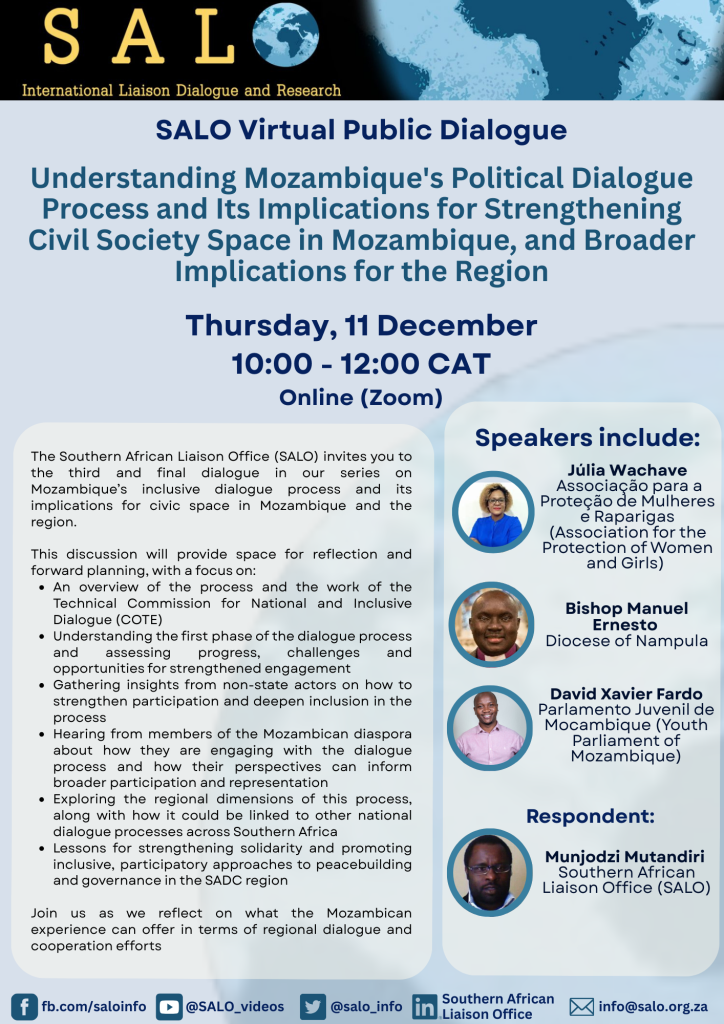
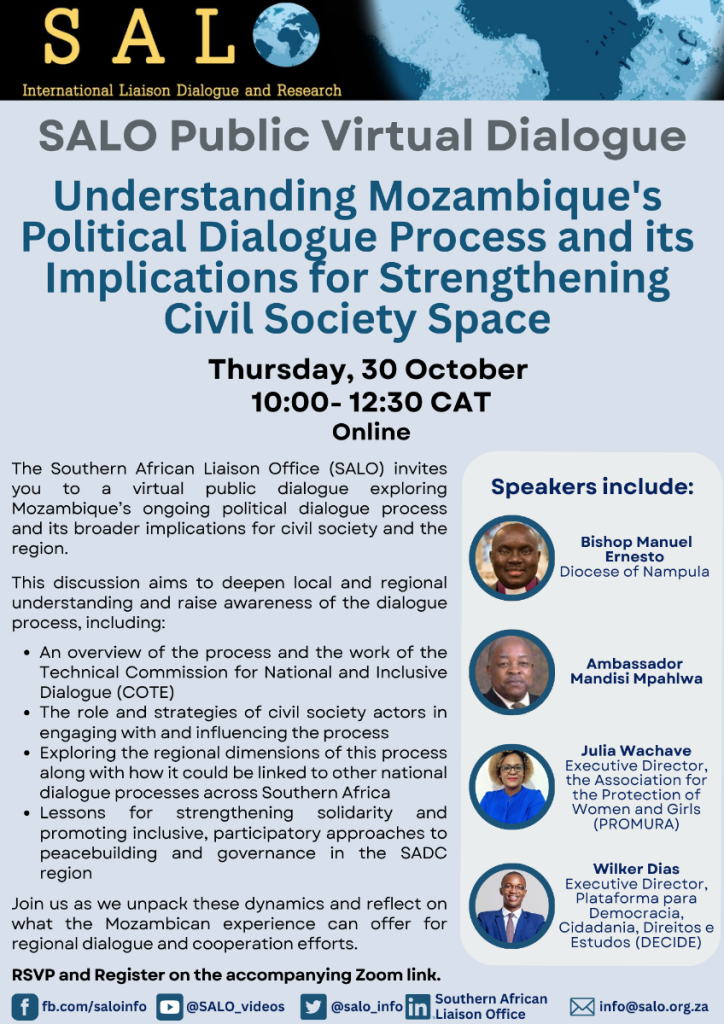
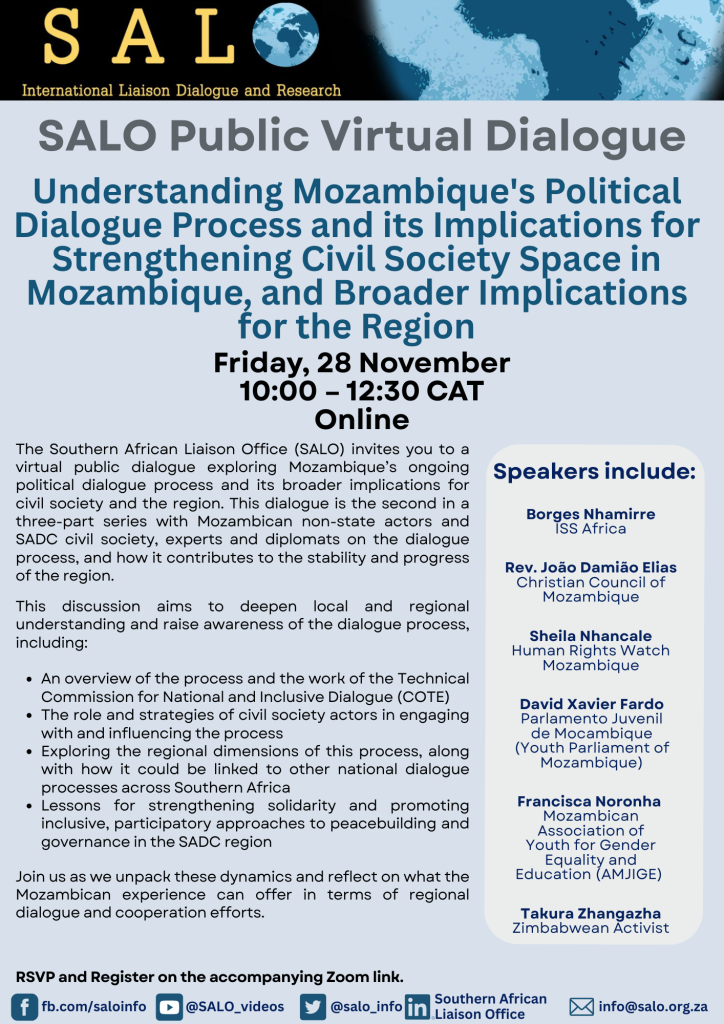
Between October and December 2025, the Southern African Liaison Office (SALO) convened a series of four dialogues examining Mozambique’s National and Inclusive Dialogue process. Together, these engagements created a structured space for Mozambican civil society actors, faith leaders, youth representatives, regional analysts, and partners from across Southern Africa to reflect on the dialogue’s evolution, its inclusivity, and its wider regional significance.
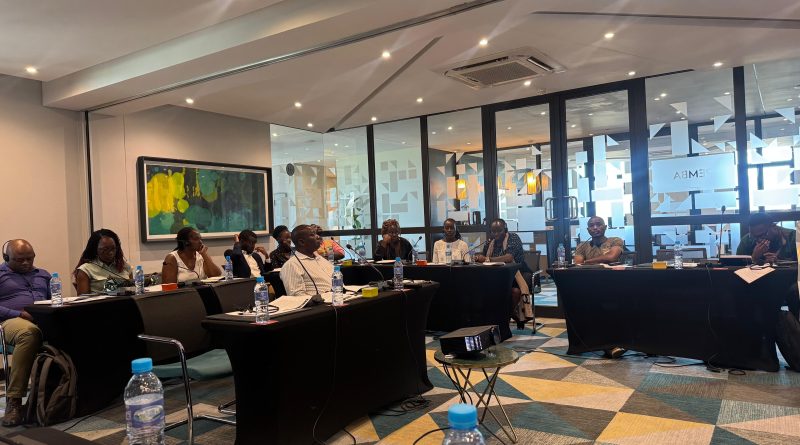
Spanning virtual public dialogues and a hybrid regional workshop held in Maputo, the series followed the trajectory of the national dialogue process as it unfolded, foregrounding civic participation, trust-building, and the conditions required for meaningful political reform.
From Political Crisis to Dialogue Moment
Across the series, participants consistently situated Mozambique’s National and Inclusive Dialogue within the context of post-election tensions, long-standing governance challenges, and persistent insecurity in parts of the country. The dialogue process was widely understood as a response to crisis, but also as a potential opening to address deeper structural issues related to political inclusion, accountability, and social cohesion.
Early discussions focused on understanding the origins, design, and intent of the dialogue process, including its legal and institutional framing. While contributors recognised the significance of a nationally anchored dialogue, they also cautioned that process alone would not be sufficient without clear reform pathways and sustained public engagement.
Civic Participation, Youth Agency, and Trust
A central thread running through all four engagements was the question of participation-who is able to engage with the dialogue process, how, and with what influence. Civil society actors repeatedly emphasised that meaningful participation requires more than consultation, particularly in a context where public trust in political institutions remains fragile.
Youth participation featured prominently throughout the series. Young people were consistently identified as key political actors, not only because of their role in recent mobilisation, but because of the long-term implications of reform outcomes for future generations. Youth-led platforms, community outreach, and parallel civic initiatives were highlighted as essential mechanisms for grounding the dialogue in lived realities and strengthening legitimacy.
Participants also stressed the importance of rebuilding trust through transparency, rights protection, and responsiveness. Without visible commitments to safeguarding civic space and incorporating citizen input into decision-making, contributors warned that dialogue risks being perceived as symbolic rather than transformative.
Inclusion, Gender, and Civic Space
Issues of inclusion and representation were addressed across the series, with particular attention to women’s participation, rural communities, and other marginalised groups. Contributors highlighted the critical role of women in peacebuilding and social cohesion, while noting persistent barriers to meaningful engagement in political processes.
The condition of civic space emerged as a cross-cutting concern. Participants emphasised that freedoms of expression, association, and assembly are foundational to credible dialogue processes, and that fear or repression undermines both participation and trust.
Regional Learning and Comparative Perspectives
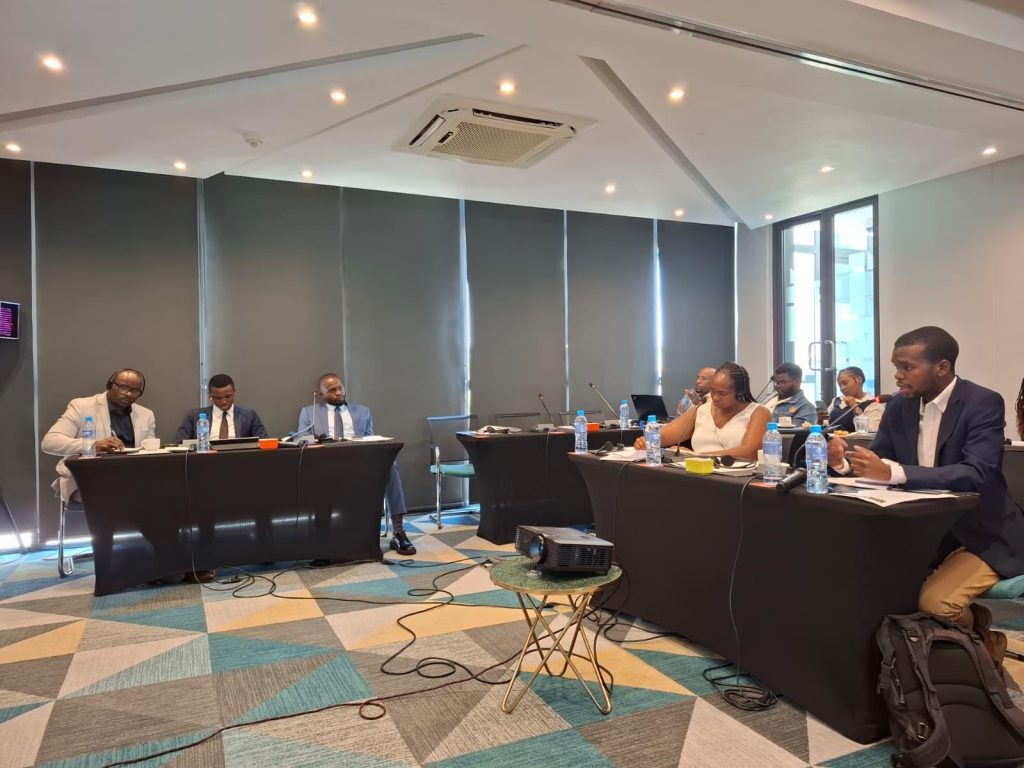
The series deliberately adopted a regional lens, recognising that Mozambique’s National and Inclusive Dialogue is being closely watched across Southern Africa. The 9 December hybrid regional workshop, held in Maputo, was a pivotal moment in this regard, bringing together in-person participants alongside regional civil society actors joining virtually from across the region. The availability of simultaneous Portuguese–English interpretation enabled inclusive engagement and meaningful cross-border exchange.
Through comparative reflection, participants identified recurring regional challenges associated with national dialogues, including elite capture, exclusion of grassroots voices, and weak implementation of agreed reforms. These insights underscored the importance of sustained civic oversight and regional solidarity in supporting credible, citizen-centred dialogue processes.
From Reflection to Forward Momentum
The final dialogue in the series provided a reflective space to take stock of the national dialogue process as it stood toward the end of the year. Participants acknowledged areas of progress while underscoring the fragility of public confidence and the risks associated with unmet expectations.
Across the series, there was broad agreement that the ultimate credibility of Mozambique’s National and Inclusive Dialogue will depend not only on participation during formal phases, but on what follows: clear implementation pathways, institutional follow-through, and continued civic engagement beyond the life of the dialogue structures.
SALO’s Ongoing Engagement
Taken together, the four dialogues reinforced that national dialogue is not a single event, but an evolving political process that requires sustained attention, inclusion, and accountability. SALO’s engagement sought to support informed civic participation, strengthen regional learning, and contribute to broader conversations on peacebuilding and democratic governance in Southern Africa.
As Mozambique continues to navigate this important political moment, SALO remains committed to facilitating reflective, inclusive, and regionally connected dialogue spaces that place citizens at the centre of reform processes.